I was diagnosed with chronic myeloid leukaemia in January 2025, at a hospital appointment I was certain was a waste of everyone's time. This is what happened next.
Darren, who built Onward · 9 min read
This is one person's experience, not a guide and not advice. Everyone's CML is different, and mine went better than some. If you have just been diagnosed, the people who know your situation are your own care team.
In August I noticed something had changed. I am a runner, and I was in pain, mostly in my legs and my back. I took three weeks off completely, which going from five days a week to nothing took some doing, and told myself I had overtrained and needed a rest.
I started again, twice a week. My heart rate was higher than it had ever been. The pains were still there and I ignored them, because I wanted to get back to doing the thing I loved.
My back got worse. The doctor thought sciatica, gave me painkillers, said it should settle in a few weeks. It didn't. I went back and was referred for an MRI. I kept running when I could, and it got worse every week.
The pain moved around. My legs, then my arms, the top of my back, the bottom of my back, and every now and then my chest. Nothing stayed in one place long enough to make sense of.
I put the chest pain down to stress. I had no idea where any of it was coming from, and I was waiting on the MRI to tell me.
By January it was my chest often enough that I went to see a nurse about whether it might be my asthma. I had it as a child, never really as an adult.
She was not happy. She wanted to call an ambulance. I told her my car was outside and I promised I would go, so she let me drive myself.
I remember thinking it was an overreaction.
Four hours, they said
At A&E they took bloods and I talked the doctor through the pains. She said she wasn't sure anything would be answered today, and that hopefully the MRI would explain the back. We laughed about it. She told me to get comfortable, it would be about four hours before all the results came back.
I was still sitting there thinking this was a waste of time and the MRI was going to sort everything out.
It was about twenty minutes before she called me back in.
This time it felt different. The first time she had been standing. Now she sat down next to me.
She said they had found something in my blood work, and that a consultant from haematology was coming to speak to me. I still didn't know what she meant. Then she said they would probably ask whether my weight had changed.
That was when it hit me. She was talking about cancer.
I burst into tears and asked whether I should call someone to be with me. She said it was a good idea, and then said that normally telling someone to call a person puts more fear into the situation.
My partner got there about three minutes before I was seen.
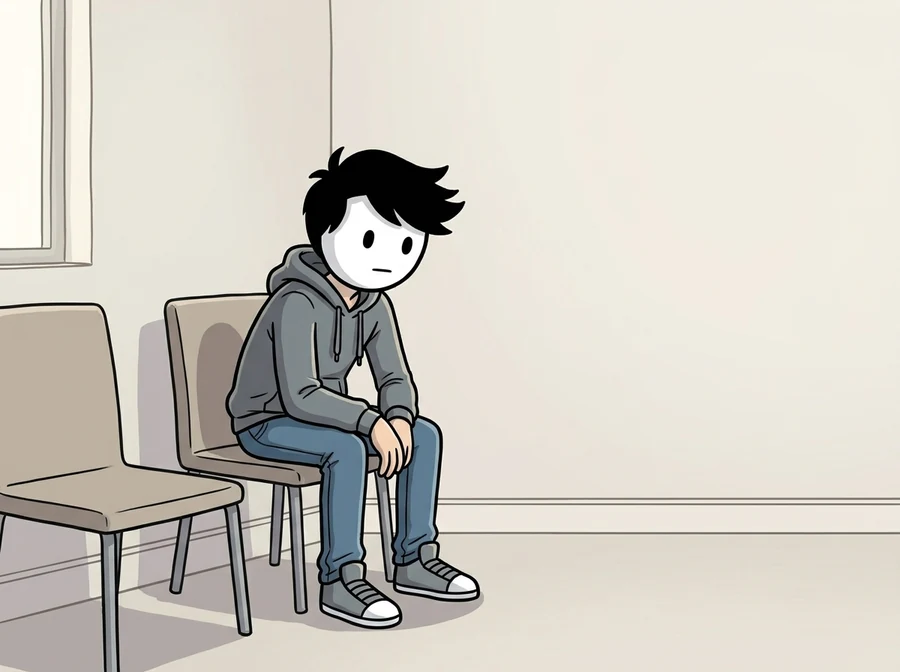
In between, I sat in the waiting room on my own, crying, and then told myself to pull it together. I looked fine. Other people in that room looked ill. Who was I to be sitting there crying.
The consultant did not pull any punches. He sat down and told me I had cancer. Leukaemia. My partner gasped out loud. We didn't know what to say.
It was the right call. I had been sitting there expecting it for twenty minutes. My partner had not, because I had not been able to stop crying for long enough to tell them.
They started me on a tablet to stop my blood being made, as a temporary measure until they knew which leukaemia it was. I took it for four days. A bone marrow biopsy the next day, and two days after that I had a diagnosis: chronic myeloid leukaemia. That is when I started imatinib.
Waiting for the biopsy was easier than I expected. It felt like treatment had already started, and the consultant had said he was ninety per cent sure. It was more of a box-ticking exercise.
I learned later that my white cell count that day was 186. A normal count sits somewhere between 4 and 11. That is why she came back in twenty minutes rather than four hours. She had not waited for the rest of the results, because she did not need to.
The consultant also explained the pains. It was bone pain, which is why it never stayed in one place. And my heart rate had been climbing because I was anaemic, the CML crowding out my red cells.
Five months of wondering, and it had all been the same thing the whole time. The back, the arms, the chest I had put down to stress, the runs that kept getting harder. One answer for all of it.
About that nurse
A few days later I had a flu jab booked. I took in a card, some flowers and chocolates for the nurse who had sent me to A&E, because without her it could have been months before anyone went looking.
She was waiting for me at reception. She had been checking my notes to see whether I had actually gone. They didn't come through from the hospital until the Wednesday morning, the day before my appointment, so that is when she found out.
Then she saw I was booked in the next day, and spent the time in between reading up on leukaemia, in case I turned up with questions she could answer.
I ask for her every time now.
The first few weeks were the worst
Looking back, those were harder than the day I was told. I did far too much.
I was frightened my life was about to change completely. I had been told I couldn't run. Two holidays I had booked were gone. I knew that once the tablets got properly into my system the side effects would come.
So I went out for dinner with friends feeling unwell, because I didn't know when I would be able to do it again. I pretended I just had a cold. I kept smiling and acting like everything was fine.
I told myself I just had to take this tablet and everything would be OK. I told myself to believe it, so it was true to me. It didn't last, but in the early days it is what got me through.
Underneath it I was worried sick, with questions all the time and nobody to ask without making them worry. So I kept it all inside.
Which was stupid, looking back, and it was never going to work forever. But it is how I dealt with it.
I was at the hospital every week for blood checks. The nurse there is lovely and always gave me as much time as I needed to ask questions. That helped more than she probably knows.
February, and a pause
A month in, my neutrophils dropped to 0.8 and my treatment was stopped for five days.
I don't remember much about that week, but I remember what the consultant said: that sometimes a short pause means the side effects don't show up the second time round. That reframed it completely. It wasn't a setback, it was part of the treatment.
It was also the first time I had heard the word neutrophils, and I wanted to understand what they were.
That is when I went looking for an app to keep track of things. I found one, but it wanted me to register an account, and it wanted to collect how I felt every day. At that point I didn't care. I just wanted somewhere to keep a log of my blood results.
When the pause ended, my bloods were in much better shape. A family member was turning eighteen. I asked my nurse whether I could have a drink and she said "enjoy your night, but you might get drunk more easily than before."
I took that entirely as a challenge.
It was the first time I had been out with friends and family since being diagnosed, and everyone wanted to buy me a drink. It was an awesome night.
May, and asking for something back
I had two marathons booked for 2025. Boston in April, which was obviously gone, and New York in November.
I asked my consultant whether I could work towards New York. He said not yet. He wanted me on treatment for a year first.
I didn't like that answer. I have been a runner for years and it is a huge part of who I am. So I asked if we could review it in three months, because New York has no cut-off time and a walk-run might be doable.
May was when I started training again.
There is a moment in my Journey from that month, a long walk along the Cinder Track with friends, eleven miles. It looks like a nice weekend away, and it was. It was also a training session. It was the first weekend away since treatment started, and I had a cruise booked for June.
That was the turning point. Not because I felt better, but because I had stopped waiting for permission to want things again. Life started to feel a bit like normal.
New York
At the review, my consultant agreed.
I told him I knew that people get cancer and think I want to run a marathon. My story was different. I was already a marathon runner, and I didn't want this diagnosis to define me.
He agreed, and put me on iron tablets to help my red cell count.
In November 2025 I ran the New York City Marathon, for the blood charity that supports the unit that looks after me.
It is officially my worst marathon time. I kept telling myself: last time I ran a marathon I wasn't also fighting cancer. You can do hard things.
What the first year looked like
BCR-ABL at diagnosis
63%
BCR-ABL one year on
0.07%
Milestones reached
MR2, then MMR
Haemoglobin
99 to 136 g/L
White cells at A&E
186 ×10⁹/L
White cells one year on
3.8 ×10⁹/L
Clinic visits
13
Days I took my tablets
357 of 364
I want to be careful here. My numbers came down quickly and not everyone's do. If yours are moving more slowly, that is a conversation for your team and not a reason to compare yourself to a stranger on the internet.
Why I built Onward
The app I had found in February kept signing me out every thirty days. Every month I had to request a code, wait about five minutes for the email, fish it out of my junk folder, and type it in. Just to look at my own blood results.
I thought there had to be a better way of keeping these details, so I started building my own.
At first it was just going to be for me, sitting in TestFlight, used by one person. But the more I developed it, the more I wanted to add. And building it made me look back properly at the whole thing, in a way I hadn't let myself do at the time.
I thought: if there are other people out there like me, then I need to share it.
So it has principles. It is completely private, your data never leaves your device, and it will always be free. Those aren't marketing lines. They come from being the person fishing a verification code out of a junk folder to read his own numbers.
I just hope it helps someone.
Three months on, I have been using it rather than building it. Here is what that has been like, including the parts I never open.
Onward
A calm, private place to follow your own CML journey. Free, with no accounts and no ads, and your data stays on your device.
Written by Darren, who has CML and built Onward. This is a personal account, not medical advice, and it describes one person's experience of a condition that affects everyone differently. Never change your treatment based on anything you read here.
 Darren, who built Onward · 9 min read